
RoboticData presents

From Reality
to Intelligence

Build the Real-World Data Foundation for Physical AI.

Robots and autonomous systems cannot learn from simulation alone. Join RoboticData for a practical three-part webinar series exploring how real-world spatial, human, environmental, and task data helps Physical AI systems move from promising prototypes to reliable deployment.

Dates to be announcedTime zone to be announcedLive virtual event · platform to be announced

Built on years of global mapping, multimodal data collection, and real-world AI experience.

3
Live sessions
45 min
Each webinar
Free
For qualified teams
The Physical AI data gap

Machines that act in the real world must learn from the real world.

Simulation and synthetic data accelerate development, but the physical world contains complexity that is difficult to reproduce: changing environments, unpredictable human behavior, sensor variation, rare events, occlusion, lighting, weather, and countless edge cases.

RoboticData helps organizations capture and transform this reality into usable data for training, testing, validation, and continuous model improvement.

01

Incomplete Coverage

Models can perform well in expected conditions but struggle when environments, objects, or behavior change.

02

Missing Edge Cases

Rare but important events may never appear in controlled or synthetic datasets.

03

Disconnected Data

Spatial, visual, human, and task data often exist in separate systems without useful synchronization.

04

Difficulty Scaling

Capturing the right data across locations, populations, conditions, and workflows requires specialized operations.

Three connected sessions

Understand the gap. Build the system. Launch the pilot.

Each webinar addresses a different stage of the robotic data journey. Attend the complete series or select the sessions most relevant to your program.

  1. 01

    Understand

    Identify the real-world data gaps affecting your system.

  2. 02

    Build

    Create a continuous robotic data flywheel.

  3. 03

    Launch

    Turn one high-value use case into a measurable 90-day pilot.

The sessions

Practical, 45-minute working sessions.

Real-world urban scene rendered as spatial data for Physical AI
Webinar 01 — Understand the gap
01
Date
Dates to be announced
Duration
45 minutes

Why Physical AI Needs More Than Synthetic Data

Closing the gap between simulation and real-world performance.

Synthetic and simulated data are valuable, but they cannot reproduce every unexpected condition, human interaction, environmental change, or long-tail event. Learn how real-world data complements simulation and helps intelligent machines perform more reliably.

What you'll learn

  • Where synthetic and simulated data provide the greatest value
  • Which real-world conditions simulation frequently misses
  • Why spatial context and environmental change matter
  • How human behavior introduces critical complexity
  • How to determine whether data is limiting model performance
  • How to balance real, synthetic, and simulated data

Agenda

  1. Physical AI versus traditional digital AI
  2. Understanding the real-world data gap
  3. Why controlled datasets fail in uncontrolled environments
  4. Real data, synthetic data, and simulation
  5. Physical AI Data Readiness Checklist
  6. Live audience Q&A
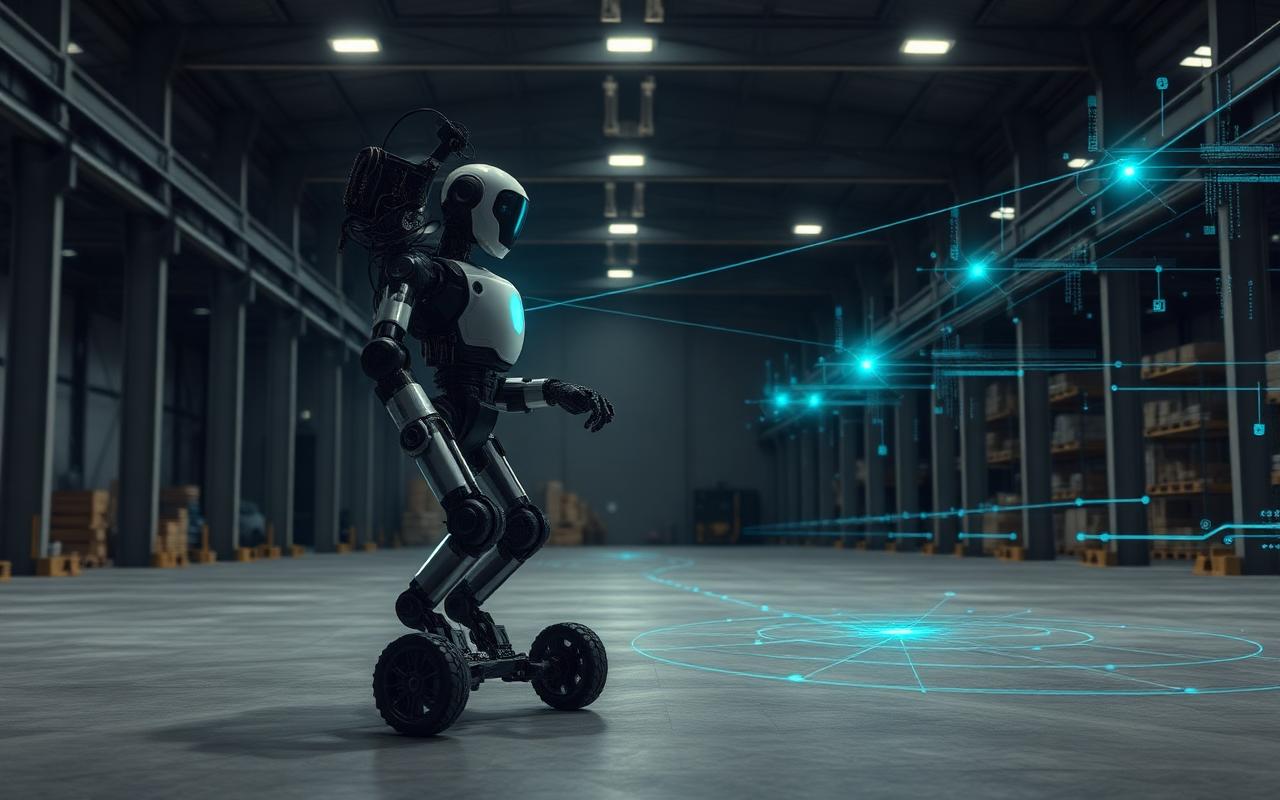
Humanoid robot capturing multimodal sensor data in a warehouse
Webinar 02 — Build the system
02
Date
Dates to be announced
Duration
45 minutes

From Data Collection to Deployment

How to build a scalable robotic data flywheel.

A successful data program is not a one-time collection project. It is a continuous cycle connecting real-world capture, data processing, model evaluation, gap discovery, and targeted recollection.

What you'll learn

  • How to translate a robotic task into a data specification
  • How LiDAR, imagery, video, wearable sensors, motion capture, and other modalities work together
  • How to design for environmental, geographic, and behavioral diversity
  • How raw data is synchronized, processed, enriched, and validated
  • How to discover and prioritize model failure cases
  • When to build internally and when to use a data partner

Agenda

  1. Begin with the task, not the sensor
  2. Define observations, actions, outcomes, and failure conditions
  3. Design a multimodal capture program
  4. Plan for diversity and difficult edge cases
  5. Process, enrich, validate, and protect collected data
  6. Close the continuous improvement loop
  7. Live audience Q&A
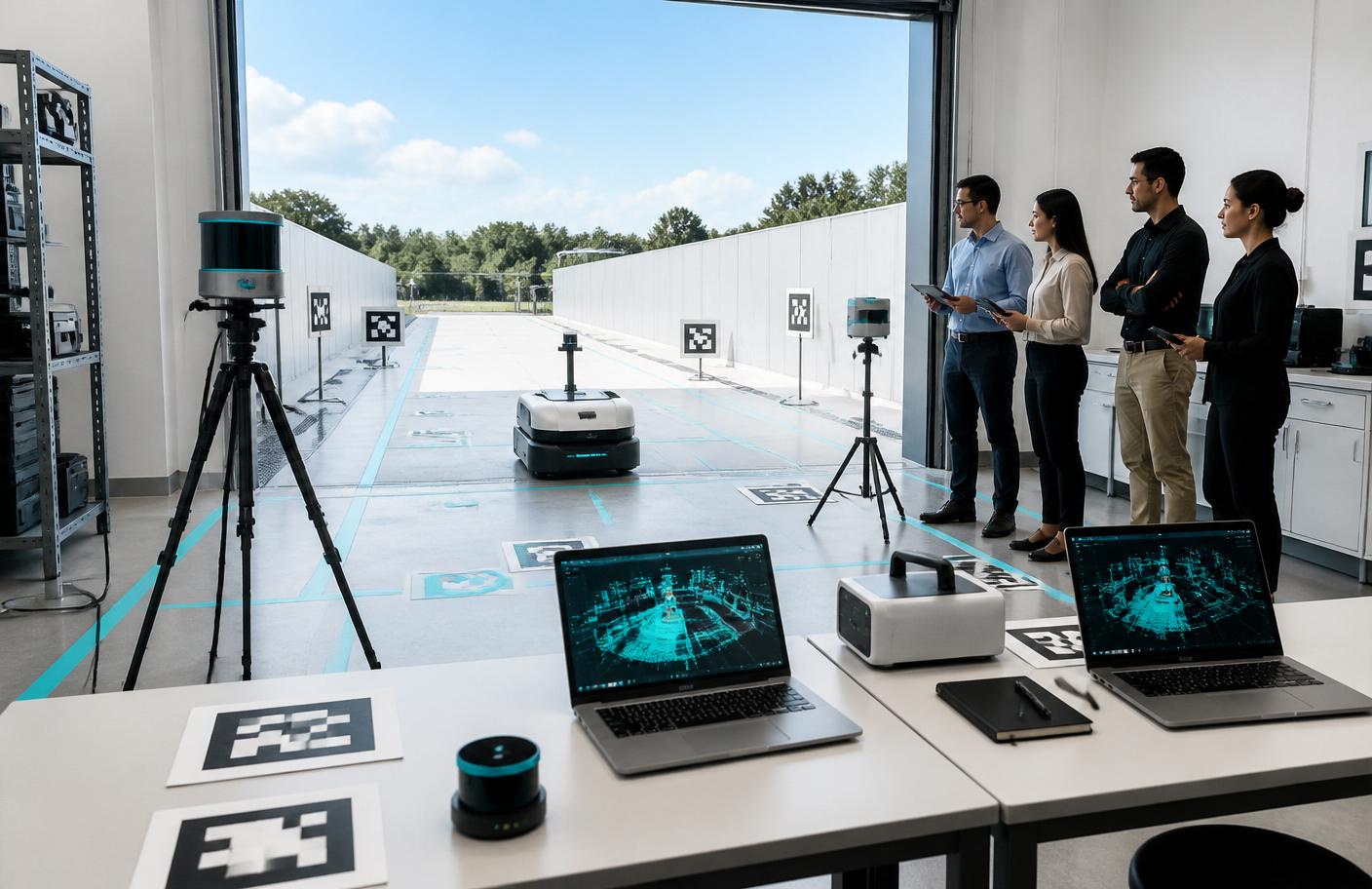
Robotics operations team reviewing a 90-day pilot test lane with LiDAR scanners and an autonomous robot
Webinar 03 — Launch the pilot
03
Date
Dates to be announced
Duration
45 minutes

Launch a Real-World Robotics Data Program in 90 Days

A practical roadmap from focused pilot to production scale.

Organizations do not need to solve their entire data problem at once. A focused pilot can validate data quality, operational feasibility, and model impact before a larger investment is made.

What you'll learn

  • How to select a valuable but manageable pilot use case
  • How to establish acceptance criteria before collection begins
  • How to structure a 30-, 60-, or 90-day engagement
  • How to address security, privacy, consent, and data ownership
  • How to measure model and operational outcomes
  • How to scale a successful pilot across regions, environments, and tasks

Agenda

  1. Why robotic data pilots stall
  2. Select the right first use case
  3. Define the required data and delivery format
  4. The RoboticData 90-day pilot framework
  5. Evaluate quality, coverage, diversity, and model impact
  6. Move from pilot to continuous production
  7. Live audience Q&A

One registration.
Three practical sessions.

Register once to attend the complete series. Every registrant will receive access to the live sessions, webinar recordings, presentation materials, and practical planning resources.

  • Three live 45-minute webinars
  • Access to all webinar recordings
  • Physical AI Data Readiness Checklist
  • Robotic Data Flywheel Framework
  • 90-Day Pilot Planning Template
  • Live expert Q&A
  • Optional consultation with RoboticData
Built for Physical AI

From mapping the world to preparing it for intelligent machines.

Voxelmaps developed deep expertise capturing and processing the physical world through high-accuracy spatial data. As robotics and Physical AI evolved, the market's needs expanded beyond maps.

Intelligent machines now require spatial, visual, human, task, interaction, and time-aware data. RoboticData represents this larger mission: helping Physical AI systems perceive, understand, navigate, and interact with reality.

World Data

Real-world spatial data captured through LiDAR, high-resolution imagery, video, aerial, street-level, indoor, and pedestrian systems.

Human and Task Data

Natural human activity, movement, interaction, and task data captured in realistic homes, workplaces, and operating environments.

Data Processing

Sensor synchronization, fusion, privacy processing, semantic enrichment, quality assurance, and model-ready delivery.

Continuous Data Programs

Repeatable collection and refresh programs designed to reveal data gaps, capture new conditions, and support continuous improvement.

Who this series is for

Real-world data for machines that act in the real world.

Robotic Navigation

Help robots understand, navigate, and respond to complex and changing environments.

Humanoid and Embodied AI

Capture human movement, tasks, interactions, and physical context for higher-degree-of-freedom systems.

Autonomous Vehicles

Expand training and validation coverage with spatial data, road environments, changing conditions, and edge cases.

Warehousing and Logistics

Capture realistic workflows involving people, objects, vehicles, shelving, loading, and material movement.

Industrial Automation

Build task-specific datasets from real operational environments and variable production processes.

Digital Twins and Infrastructure

Create time-aware representations of cities, facilities, transportation networks, and other physical assets.

Speakers

Learn from the team building real-world data infrastructure.

Peter Atalla

Featured across the series

Peter Atalla

Executive and Physical AI Strategy

Leader with deep experience shaping the real-world data strategy behind large-scale Physical AI programs.

LinkedIn →
Headshot to be added

Leading Webinar 02 · Build the System

Speaker to be announced

Global Data Collection and Operations

Operator responsible for capturing multimodal real-world data across geographies, environments, and workflows.

LinkedIn →
Headshot to be added

Leading Webinar 03 · Launch the Pilot

Speaker to be announced

AI, Processing, and Data Engineering

Engineering leader focused on synchronizing, enriching, validating, and delivering model-ready robotic datasets.

LinkedIn →
Registration

Register for the RoboticData Webinar Series.

Complete the form once to attend the full series or select individual webinars. You'll receive calendar invitations and access to every recording and resource.

  • Three 45-minute practical sessions
  • All recordings and slides
  • Working templates and planners
  • Direct access to expert Q&A

Your information is used only to deliver the webinar series and related RoboticData resources.

Ready to apply this?

Bring us one high-value robotics use case.

RoboticData will help you identify the real-world data your system requires, define measurable success criteria, and develop a focused path from pilot to production.

A focused 30-minute consultation for qualified robotics, autonomous-system, and Physical AI teams.

FAQ

Answers to common questions.

This series is designed for leaders and practitioners working in robotics, autonomous systems, Physical AI, AI and machine learning, simulation, data engineering, digital twins, and intelligent infrastructure.

Give Physical AI the reality it needs.

Join the complete webinar series and learn how to build a reliable real-world data foundation for your robotics or autonomous-system program.

Talk to RoboticData